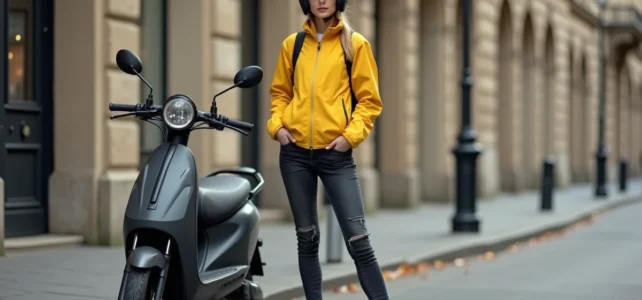
The choice of an outfit for riding an electric scooter is rarely just a matter of style. Between documented skin injuries reported by emergency services, regulatory constraints on visibility, and the impact of prolonged standing posture on joints, each piece of clothing serves a specific function. Comparing these parameters allows us to distinguish between what is merely accessory comfort and what truly provides protection.
Body Areas Exposed While Riding a Scooter: Risk Table by Type of Clothing
Several French university hospitals (Paris, Lyon, Marseille) and the French Society of Emergency Medicine report a significant increase in serious skin injuries among users in shorts or short skirts: friction burns, deep wounds. The speed involved is over 20 km/h, which is the common usage range of an electric scooter limited to 25 km/h.
Related reading : Everything You Need to Know About the Price of the Leclerc Photo Booth: Reviews and Tips for Making the Right Choice
| Body Area | Inappropriate Clothing | Recommended Clothing | Main Risk |
|---|---|---|---|
| Legs | Shorts, short skirts | Long abrasion-resistant pants | Friction burns, deep wounds |
| Arms | Sleeveless tops, short-sleeve T-shirts | Long sleeves, covering fabric | Abrasion, cuts |
| Feet and Ankles | Sandals, flip-flops, flat shoes without support | Closed shoes with cushioning and ankle support | Sprains, vibrations, loss of support |
| Torso (visibility) | Dark clothing without reflective elements | Vest or high-visibility bands | Collision due to lack of perception |
| Hands | Bare hands | Gloves with palm protection | Fractures, abrasions during a fall |
This table summarizes the cross-recommendations from trauma services and ergonomists. The common denominator: cover the skin and support the joints, even in hot weather.
To delve deeper into the subject, a comprehensive guide on appropriate clothing for electric scooters details clothing combinations based on the season and type of journey.
You may also like : How to Choose the Best Tablets for Photobooths and Make Your Wedding Photos Shine
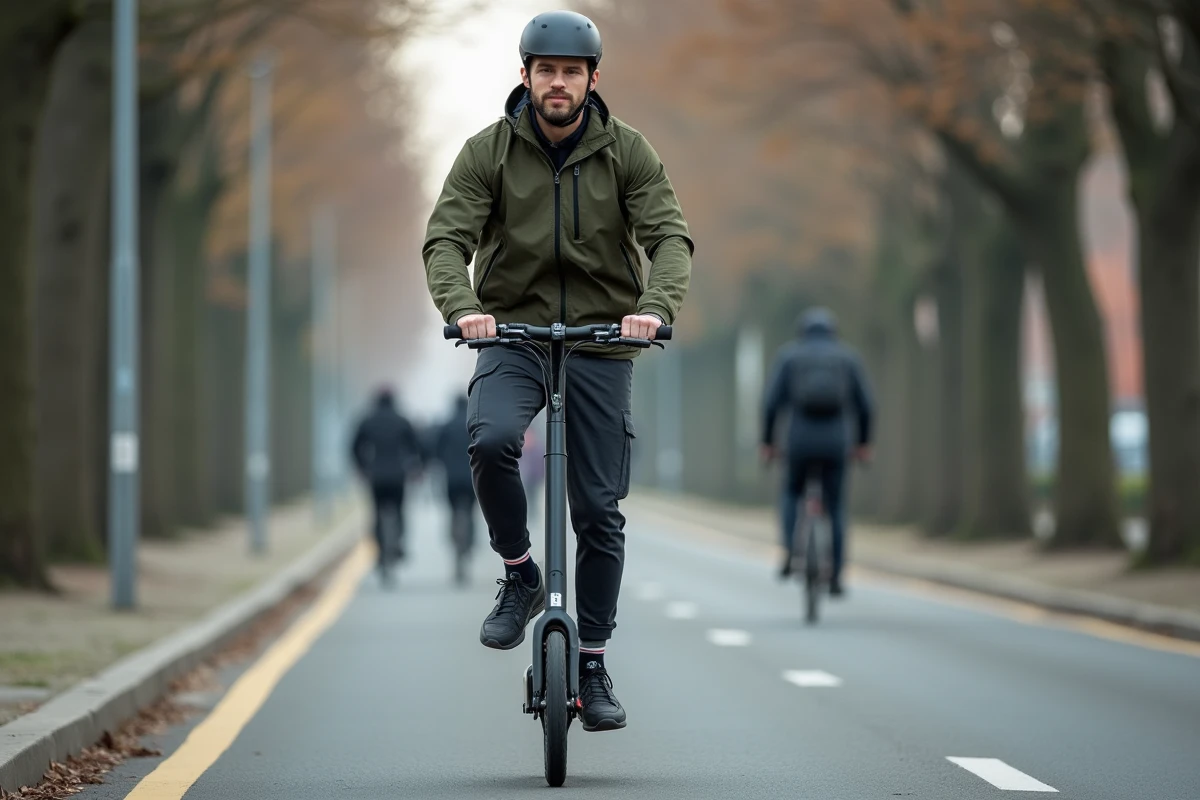
Shoes for Electric Scooters: Cushioning, Sole, and Foot Support
Reports from INRS and ANACT (2023-2024) on EDPM fleets in companies highlight a specific risk that competing articles address little: musculoskeletal disorders related to prolonged standing posture. The vibrations from the deck, transmitted through the wheels and tires, travel directly into the feet, knees, and lower back.
Ergonomists recommend shoes that combine three characteristics:
- Good cushioning at the heel and forefoot to absorb vibrations from the terrain (cobblestones, asphalt joints, potholes)
- Anti-vibration soles, thicker than a standard sneaker sole, that filter repeated shocks during daily commutes
- Firm support for the foot and ankle to prevent slipping on the deck during braking or turning
A soft running shoe is not enough: the sole deforms laterally and offers no stability in turns. In contrast, a high-top shoe like a lightweight hiking boot or reinforced sneaker meets these three criteria without weighing down the outfit.
Tires, Pressure, and Terrain Type: The Connection to Shoes
The type of tires and the inflation pressure of the scooter directly affect the vibrations felt. Inflatable tires at low pressure absorb more than solid wheels. When the scooter poorly filters shocks (small diameter wheels, hard tires), the shoe becomes the last shock absorber before the skeleton.
Checking tire pressure before each ride reduces joint stress. It is a maintenance action for the scooter that also impacts clothing comfort.
Visibility and Reflective Clothing: What EDPM Regulations Require
Since the decree of April 12, 2024, amending the Highway Code for EDPM, wearing reflective elements is no longer just a recommendation for nighttime. Accident data shows that a significant portion of collisions results from the driver’s failure to perceive the scooter rider.
Several insurers and prevention organizations now recommend high-visibility clothing in any situation of insufficient visibility: fog, rain, tunnels, not just after sunset. The yellow vest remains the most visible solution, but jackets or backpacks incorporating reflective bands offer a less cumbersome alternative for daily urban commutes.
Dark Clothing During the Day: A False Sense of Security
During the day, black or navy clothing makes the scooter rider almost invisible in a vehicle’s blind spot. Bright colors (fluorescent yellow, orange) increase the distance at which a driver spots the scooter rider. A light or fluorescent top worn with dark pants is the most common compromise between discretion and safety.
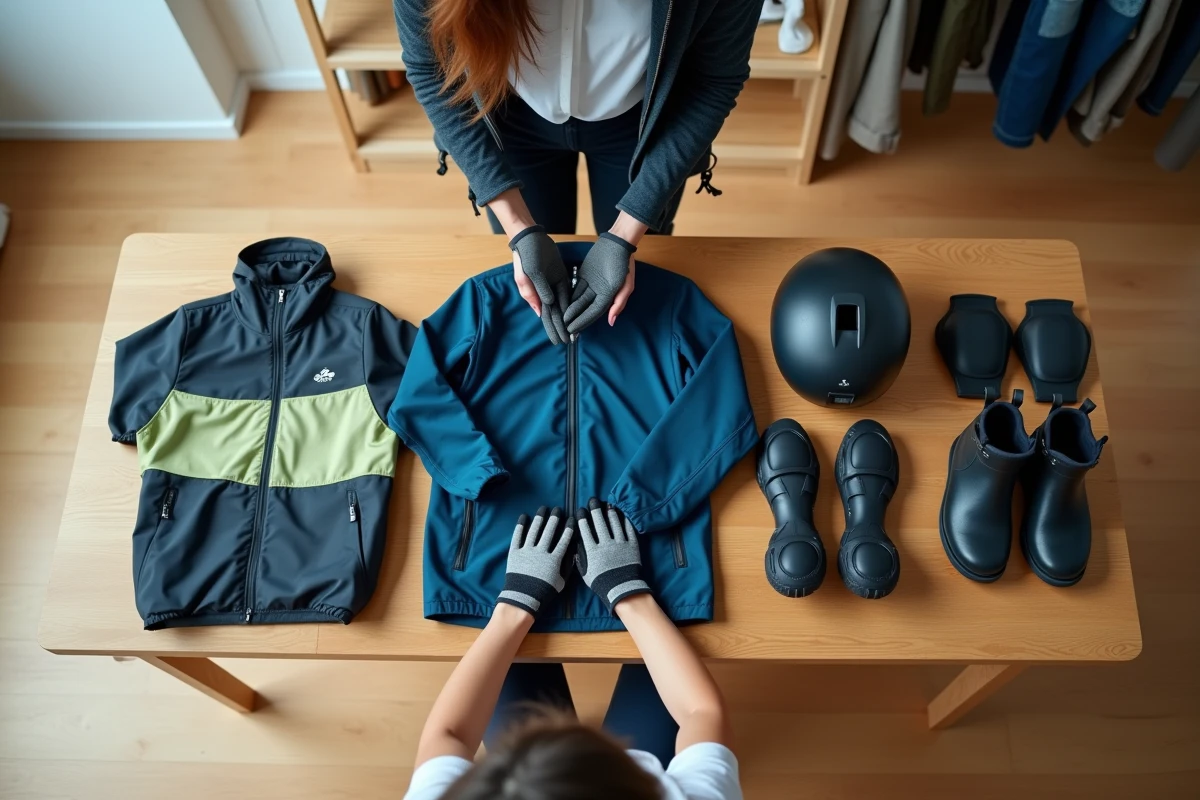
Abrasion-Resistant Pants: Technical Fabric or Thick Jeans
The recommendations from university hospitals converge towards wearing long abrasion-resistant pants for any journey over 20 km/h. Two options dominate: thick jeans (dense weight, tightly woven cotton) and technical pants from the cycling or lightweight motorcycle world.
Thick jeans provide adequate protection against friction on asphalt during a slide, provided the fabric is not worn or thin stretch. However, they absorb water and become heavy in the rain. Technical pants, often made of reinforced polyester at the knees, dry faster and resist abrasion better for a lower weight.
- Thick jeans: accessible, versatile for daily use, but heavy when wet and less effective in abrasion than technical fabric
- Reinforced cycling/motorcycle pants: better resistance, quick drying, but higher price and less discreet look
- Leggings or thin stretch pants: to be avoided, almost no protection against friction burns
The choice depends on the frequency of trips. For daily use, technical pants with reinforcements are justified. For an occasional journey of a few minutes, a pair of jeans in good condition offers sufficient protection.
The ideal outfit for riding an electric scooter is nothing spectacular: covering and durable pants, shoes with cushioning and support, a visible top, gloves. Each piece addresses a risk documented by emergency responders and ergonomists, not a fashion trend. The first reflex before getting on the deck remains to ensure that the skin is covered and that the feet are well supported.