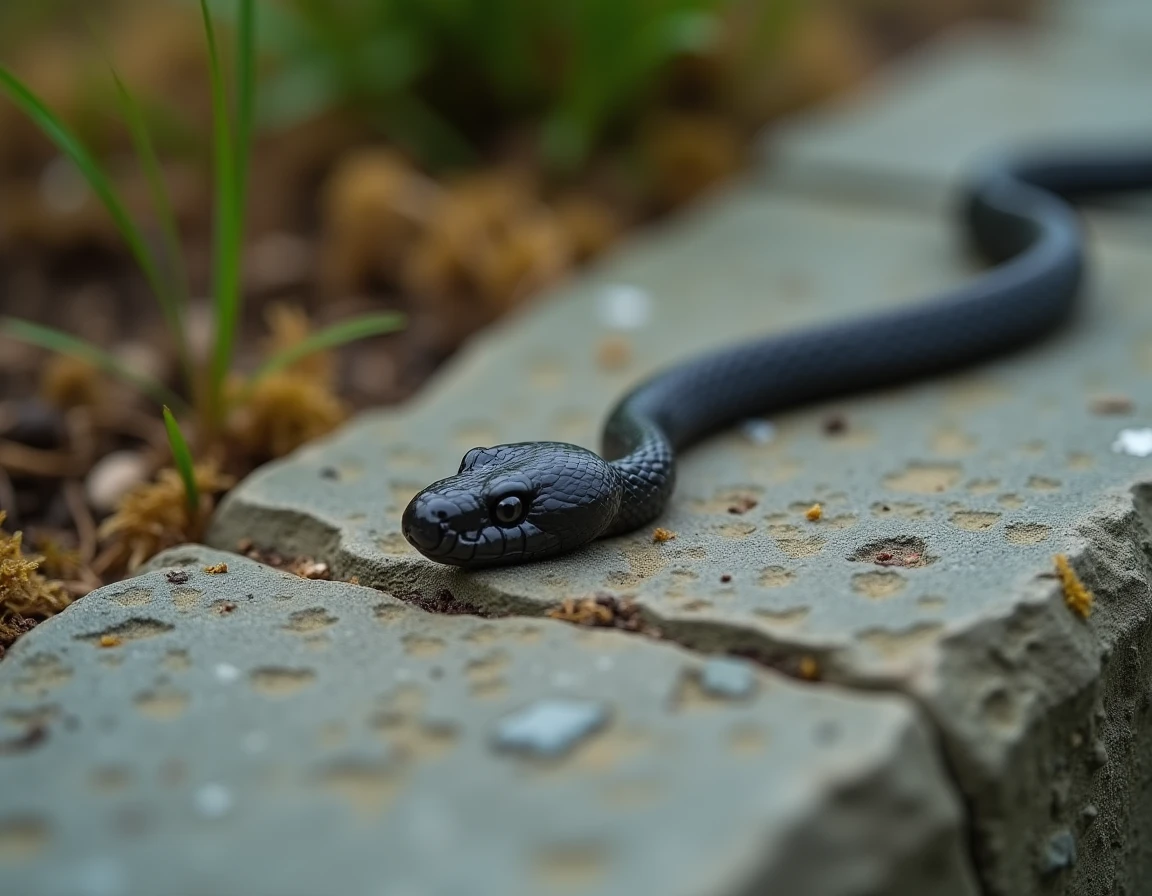
You turn over a board lying on the ground and come across a small dark cylinder, slightly shiny, ending with a whitish spot. This is what a snake’s droppings look like. This excrement often goes unnoticed, confused with that of a bird or a small mammal, while it provides valuable information about the wildlife inhabiting your garden.
Recognizing a snake’s droppings among other garden excrement
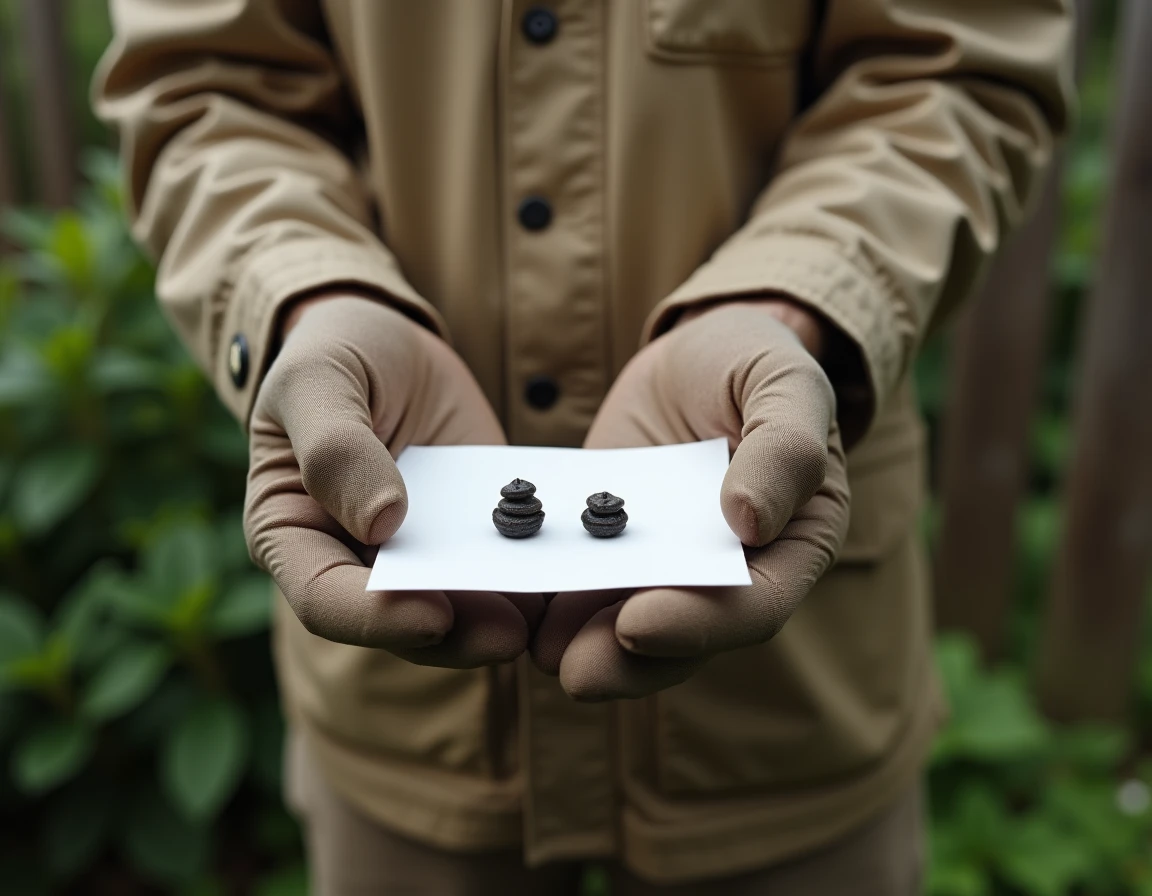
The snake’s droppings are distinguished by their elongated shape, sometimes cylindrical, sometimes slightly twisted. Their color ranges from dark brown to black. The detail that sets them apart from the droppings of a weasel or hedgehog is the white or creamy part at one end. This white residue corresponds to uric acid, the equivalent of urine in reptiles. Snakes and serpents generally expel urine and feces at the same time, through the same opening (the cloaca).
Have you ever noticed remains of scales, fur, or small bones in a droppings found in the garden? That’s a strong clue. Snakes swallow their prey whole, and undigested elements end up in the droppings. A weasel’s droppings, by comparison, often contain fragments of fruit or pits and emit a very pronounced musky odor.
To find photos and information about snake droppings, a visual marker is useful: the size rarely exceeds that of a little finger for the most common species in France, such as the grass snake or the green and yellow snake.
What snake droppings reveal about the biodiversity of your soil
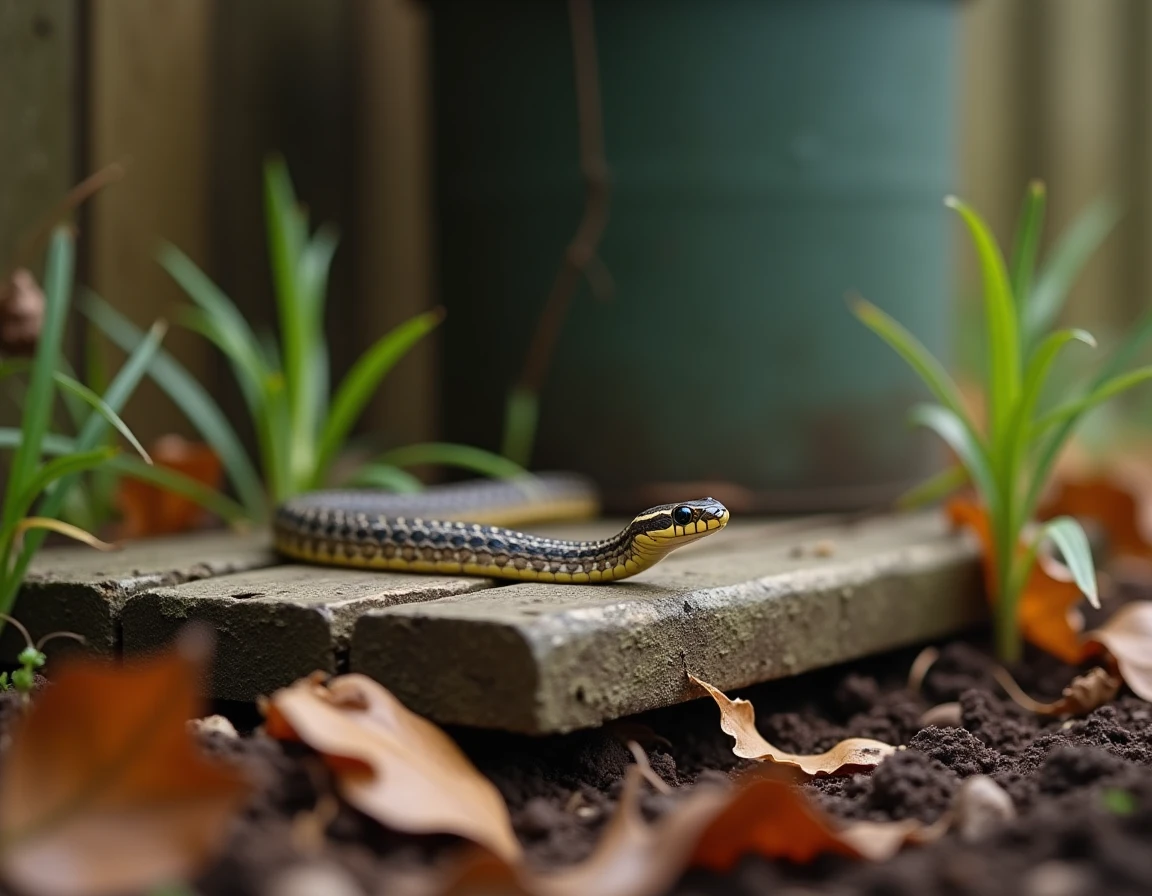
Most articles about snakes in the garden discuss their role as predators. They overlook a less visible aspect: their droppings serve as an indicator of the local small fauna. By observing the contents of a droppings (with the naked eye or with a magnifying glass), you can determine what the snake has eaten recently.
Remains of rodent fur indicate the presence of voles or mice. Fragments of fine, translucent bones point to lizards. Gelatinous residues, sometimes accompanied by tiny vertebrae, indicate the consumption of frogs or newts.
In herpetology, the analysis of snake feces (through classical dissection or environmental DNA) allows for tracking the evolution of prey over time. In a garden context, the principle remains the same, on a smaller scale: regular monitoring of droppings found throughout the seasons qualitatively documents variations in small fauna. More rodent fur in spring, more amphibian remains in autumn: this shift reflects the natural cycles of your plots.
Snake droppings and hygiene in the garden: the Salmonella risk
Before picking up a snake’s droppings with bare hands to examine it, a precaution is necessary. Reptile droppings, including those from apparently healthy wild animals, frequently carry Salmonella. This risk, well documented for pet reptiles, also applies to garden snakes.
Concrete precautions to adopt
- Wear disposable gloves if you handle a snake’s droppings, even if dry. The bacteria survive for a long time on inert surfaces.
- Wash your hands with soap after any contact with the soil in an area where you have spotted snake droppings.
- Disinfect gardening tools (pruners, trowels) that have touched a contaminated surface, especially if you are then working in the vegetable garden.
- Keep young children away from areas where wood, stones, or compost are stored, where snakes like to settle.
Direct contact with reptile droppings should be systematically avoided, even if the risk of infection remains low for a healthy adult. Immunocompromised individuals and children under five are the most vulnerable.
Snake droppings and natural soil fertilization
The snake does not produce a volume of droppings comparable to that of a hedgehog or a bird. Its direct contribution of organic matter remains marginal. However, the regular presence of droppings in a specific area of the garden indicates an active hunting territory, and thus a natural regulation of rodent and slug populations.
This ecological service is worth more than the droppings themselves. A garden that hosts one or two snakes suffers less damage to young vegetable plants, seedlings, and bulbs. Voles, in particular, wreak havoc on the roots of fruit trees and perennials. The snake actively hunts them, often in their own burrows.
Encouraging the presence of snakes without traps or products
Rather than trying to attract snakes with complex setups, focus on what makes them stay:
- Leave a pile of flat stones exposed to the morning sun: snakes warm up there after the night and digest their prey.
- Maintain a dense vegetation area (tall grasses, low brambles) along the edge of the garden. This cover protects snakes from birds of prey and cats.
- Keep an accessible water point (even a simple container buried at ground level). The grass snake, linked to humid environments, hunts frogs and newts there.
An overly “clean” garden repels snakes just as much as a garden treated with pesticides. Mowing everything short and removing every natural shelter amounts to eliminating the free regulation of pests.
Snake droppings, far from being just waste, serve as a discreet marker of the biological balance of your land. Observing them without fear, handling them with gloves, and especially preserving the conditions that allow their author to remain: these are the three actions that matter for a garden where nature works in your favor.