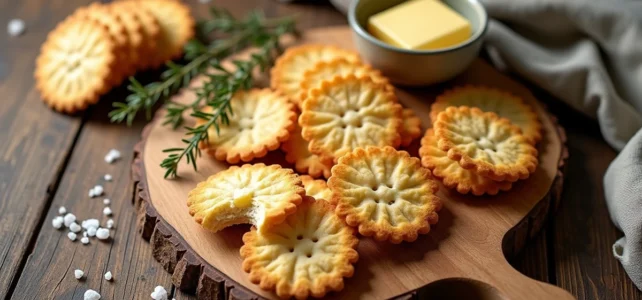
The Breton craquelin is unlike any other biscuit. Its thin shell cracks under your fingers, while the inside remains hollow and airy. This puffed bread, originating from the Rance region, between Côtes-d’Armor and Ille-et-Vilaine, owes its unique texture to a precise manufacturing technique that few recipes replicate faithfully.
Scalding and puffing: the technical gesture that distinguishes the Breton craquelin
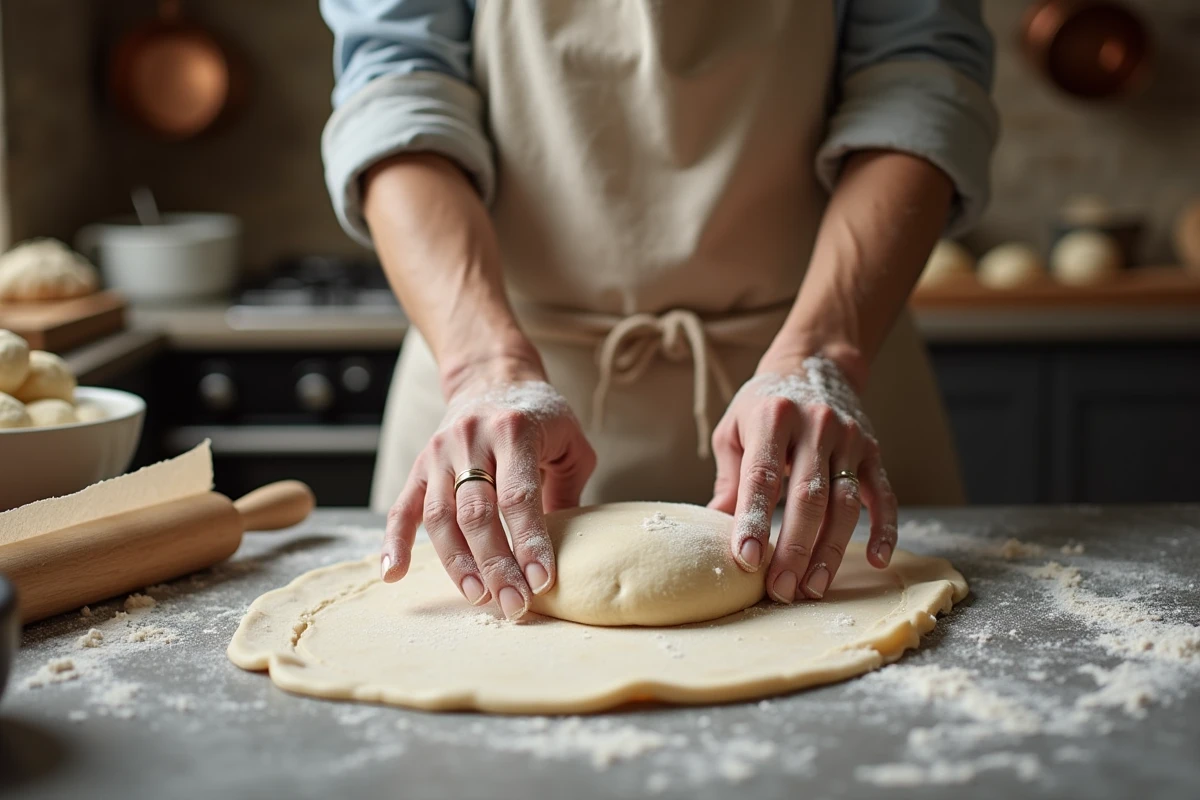
Have you ever noticed that a craquelin is hollow inside, even though it contains neither baking powder nor leavening agent? This characteristic emptiness comes from a step called scalding. The dough, once shaped into small rings or balls, is plunged into hot water before baking. This quick immersion in water alters the gluten structure on the surface. The result: in the oven, the trapped steam expands the interior while the crust sets.
Related reading : Preparing Seafood: Tips and Mistakes to Avoid When Cooking Mussels
This is exactly the same principle as that of a pretzel or bagel, but taken further. The craquelin then goes into cold water to set this pre-cooking, after which it is drained and baked at high temperature. Without this scalding, there is no puffing: you end up with a simple dry bread.
The historical recipe published in 1607 in the “Thrésor de santé” already describes this process precisely: “One puts the paste in hot water and then in cold water.” Four centuries later, the gesture remains the same in the bakeries of Saint-Malo.
Read also : Fashion Trends and Tips for a Stylish Everyday Look
If you want to try this process at home, you can find the recipe for Breton craquelins on L’Entracte Gourmand with detailed scalding times.
Flour, butter, and baking: choices that change the result
The list of ingredients for the craquelin is short: wheat flour, eggs, butter, water, salt. No sugar in the traditional version. This simplicity makes each ingredient crucial.
The role of flour
A type 55 flour, rich in gluten, provides the best elasticity for scalding. A flour that is too weak (T45 pastry flour) produces a dough that disintegrates in hot water. Conversely, a semi-whole flour (T80) adds a more rustic flavor but reduces puffing.
Butter and kneading
Breton semi-salted butter adds flavor and plasticity to the dough. The kneading step is lengthy: the dough must be worked until it becomes very smooth and firm. The historical term used is “to crush” the dough with a round pestle, which shows how intensive kneading conditions the final texture.
Oven temperature
Since the rise in energy costs in 2022, several Breton workshops have replaced their old gas ovens with electric models with very controlled temperatures. This change, documented by Le Télégramme in 2023, has allowed a more consistent expansion of the craquelins and less waste in production. At home, a preheated oven at maximum temperature, then lowered during baking, mimics this thermal control.
Variations of Breton craquelins: from plain to sweet
The traditional craquelin is plain, salty, designed to accompany oysters, fish soups, or seafood. However, variations have multiplied.
- The sweet butter craquelin takes the classic base and adds sugar to the dough and a light glaze after baking, bringing it closer to a snack biscuit
- The lemon version incorporates zest into the dough before scalding, giving a fresh flavor without altering the puffed texture
- Organic or “clean label” craquelins, which have been on the rise since 2020, use local flours and Guérande salt, without any baking improvers or additives
Why these reformulations? The demand from gourmet shops and organic sections in large retailers has pushed manufacturers to shorten the ingredient list to the bare minimum. The craquelin lends itself well to this since its original recipe already contains only four or five components.
Gourmet tips for serving craquelins differently
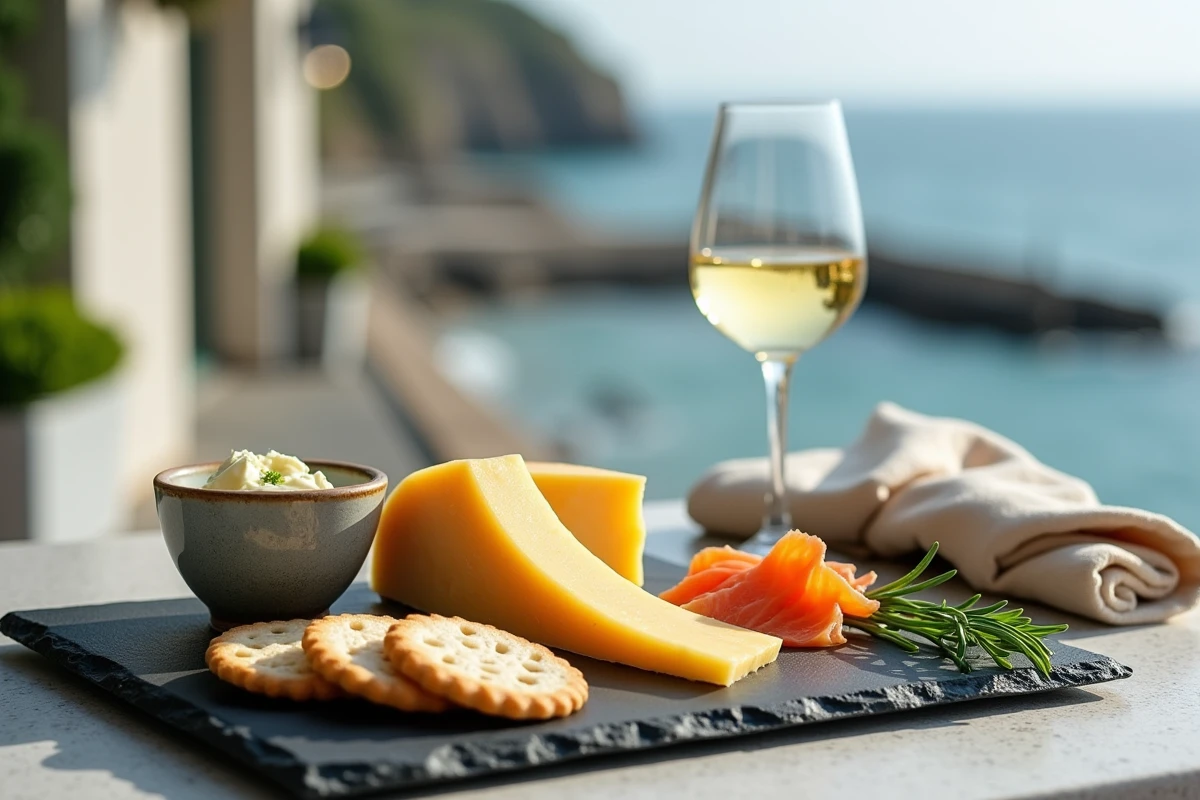
The plain craquelin can be spread like toast, but its lightness allows for more original combinations than classic toasted bread.
- For dessert, a vanilla milk cream poured into a craquelin split in half creates a striking contrast of texture between the crunch of the shell and the creaminess of the cream
- With fresh cheese and red fruits, the craquelin advantageously replaces the tuile or meringue in a sweet-salty plate
- Crumbling it over a soup or velouté adds crunch without weighing down the meal, making it an interesting alternative to classic croutons
A well-stored craquelin remains crispy for several weeks in an airtight container at room temperature. The main enemy is moisture: once softened, a few minutes in a hot oven is enough to restore its original crunch.
Pairings with strong flavors
The neutral taste and airy texture of the craquelin make it an ideal base for preparations with strong flavors. Sardine rillettes, tapenade, seaweed butter: the biscuit masks nothing and absorbs little fat thanks to its smooth surface. This is also why it traditionally accompanies seafood on Malouin tables.
The Breton craquelin remains a product of deceptive simplicity. Four ingredients, a bath of hot water, a well-regulated oven, and the result oscillates between a dry biscuit and an unparalleled puffed bread. Success relies less on the recipe than on mastering the scalding, this ancient gesture that the artisans of Saint-Malo have been perpetuating since the Middle Ages.