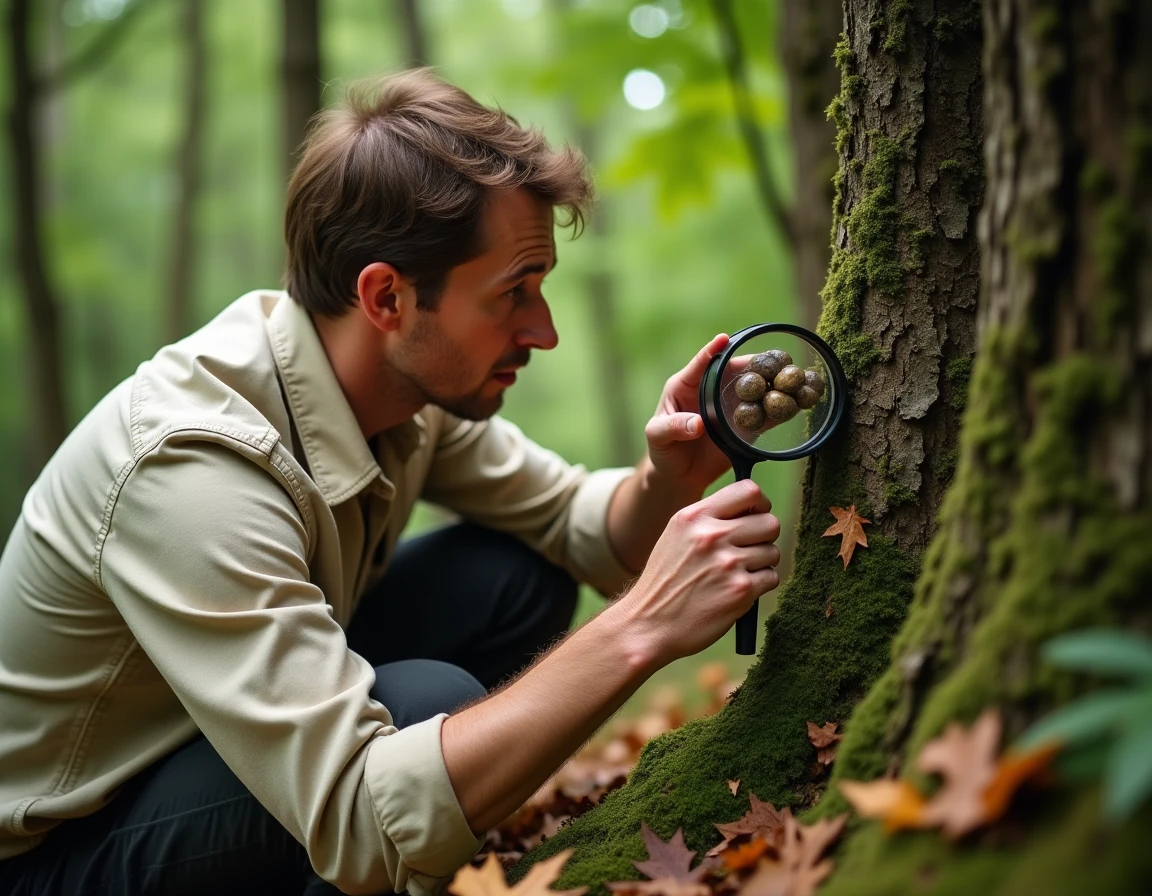
Oak galls fascinate as much as they worry. These rounded, sometimes spectacular growths appear on the leaves, buds, or stems of oak trees and regularly raise the same question: can they pose a risk to human health? A gall is a plant tissue produced by the tree itself, and the available scientific data confirm no danger to humans.
Oak gall and human health: what medical databases say

A search in medical databases using terms like “oak gall AND human health” or “Cynipidae gall AND dermatitis” reveals no clinical cases of human pathology caused by an oak gall. No publication describes parasitic, fungal, or bacterial transmission of the gall to humans.
This result deserves to be stated clearly: the gall is a plant tissue, produced by the tree itself in response to an external aggression. It contains neither toxins directed against humans nor infectious agents capable of crossing the human skin or mucosal barrier. To delve deeper into the question of oak galls in humans, one must distinguish the gall itself from the organisms living inside it.
Popular belief often rests on confusion: because the gall resembles a tumor or an infection, it is attributed a pathogenic power that it does not possess. The visual analogy with a skin lesion is enough to fuel concern, without biological basis.
Cynipid wasps and skin irritations: the real issue
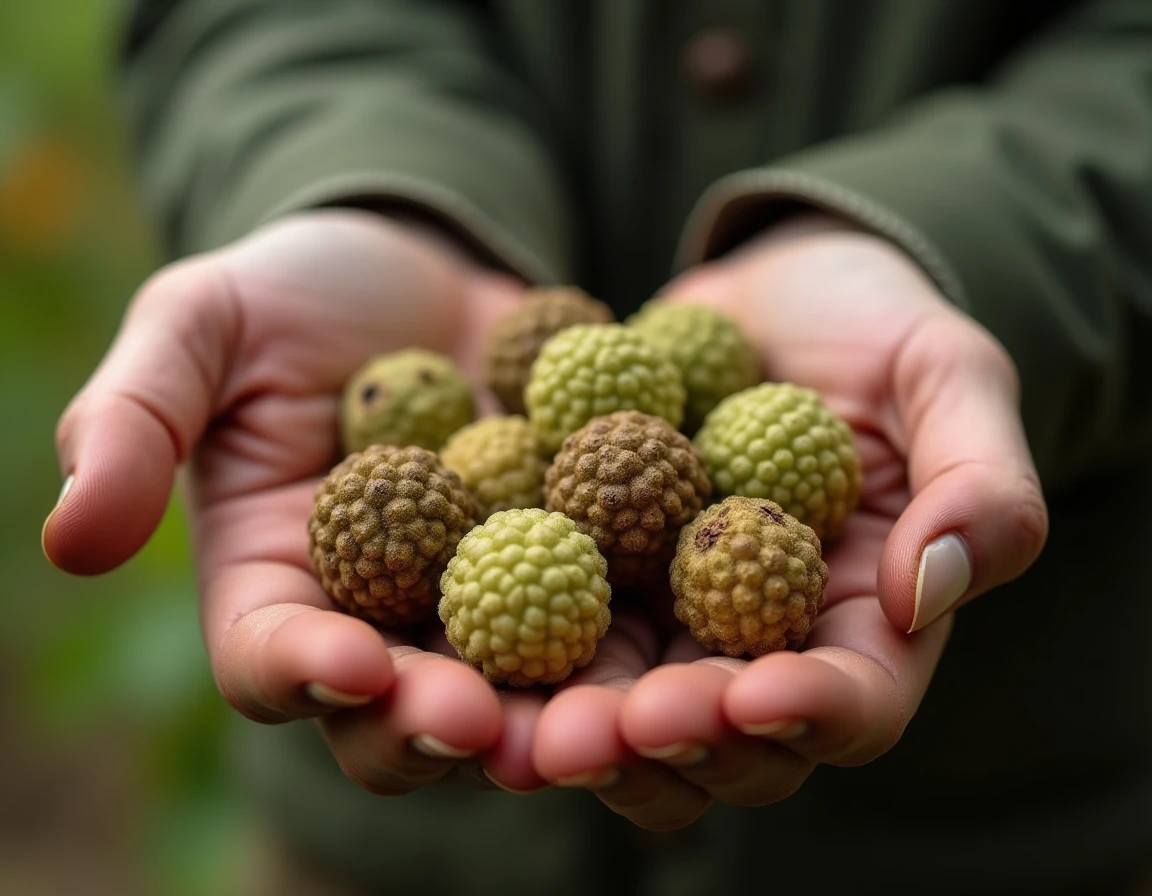
While the gall itself is harmless, the insects it harbors deserve closer examination. Oak galls are primarily caused by small wasps from the Cynipidae family. The female pierces the plant tissues to lay her eggs and injects chemical substances that alter the tree’s cellular development.
These cynipid wasps can cause slight skin irritation if handled directly. Field reports vary on this point: some sensitive individuals report local redness after crushing a fresh gall containing larvae, while others feel nothing.
The nuance is as follows: it is not the gall (the plant tissue) that irritates, but the contact with the insect or its secretions. This distinction radically changes the risk assessment.
Other organisms associated with galls
Galls do not only harbor cynipids. Mites, fungi, and bacteria can also trigger gall formation on various plant species. On oak, cynipids dominate, but other microorganisms sometimes coexist within the structure.
The available data do not allow for a conclusion about a systematic allergic risk related to this associated fauna. Well-documented pathologies exist for other tree-dwelling insects (pine processionary caterpillars, certain mites), which contributes to the confusion with oak galls.
Oak galls: why the myth persists
Three mechanisms explain the persistence of this belief:
- The appearance of galls, which visually evokes a pathology (swelling, growth, deformation), triggers an instinctive distrust reflex, even among informed individuals.
- The confusion between galls and other real risks associated with trees (processionary caterpillars, ticks, toxic fungi) creates a blend where anything growing abnormally on a tree becomes suspect.
- The lack of public scientific communication on the subject leaves room for approximate interpretations relayed on forums and social networks.
The spectacular nature of certain galls amplifies concern. The oak apple (Biorhiza pallida), for example, can reach several centimeters in diameter. The cherry gall (Cynips quercusfolii), bright red, resembles a parasitic fruit. These unusual forms reinforce the idea of a potentially dangerous anomaly.
Handling an oak gall: practical precautions
Should one handle galls without any precautions? The answer calls for a bit of common sense rather than fear.
Picking up or observing a dry gall poses no documented risk. Galls collected in autumn or winter, once the insects have emerged, are inert plant structures. They have indeed been used for centuries to produce ink (iron-gall ink, made from tannins extracted from galls).
For fresh galls still inhabited by larvae, a few precautions are common sense:
- Avoid crushing the gall with bare hands if the skin is sensitive or has lesions.
- Wash hands after handling, as with any prolonged contact with decomposing plant material.
- Do not touch the eyes or mouth after handling an open gall.
These recommendations apply to any handling of organic material in a natural environment. They are not specific to oak galls and do not indicate a particular danger.
Particular case of allergic individuals
Individuals with known skin allergies (contact eczema, hives) may react to compounds released by the insects present in fresh galls. In case of a persistent local reaction after contact, a dermatological consultation can help identify the responsible allergen, which will be the insect or its secretions, not the plant gall itself.
Galls and trees: an impact on the oak, not on humans
The real issue of galls concerns the health of the tree, not that of humans. Each species of cynipid causes a specific form of gall. Some species have two annual generations, each producing different galls depending on the season.
On a healthy adult oak, galls do not compromise the tree’s survival. They consume a portion of the resources (sap, nutrients), but the tree generally compensates without difficulty. On a young tree already weakened by drought or another pathology, a massive infestation of galls can slow growth.
The gall is a common ecological phenomenon, present in almost all European oak forests. It reflects a complex interaction between the tree and its parasites, with no link to human health. No medical publication documents any pathology related to contact with an oak gall.