
The Swiss real estate market is going through a phase where prices continue to rise, but not uniformly everywhere. Some segments are slowing down, others are accelerating, and the gap between what is being built and what households are looking for has never been more visible. Understanding these dynamics helps in making better decisions, whether one is a buyer, tenant, or investor.
Discrepancy between housing shortage and actual supply in Switzerland
Have you ever noticed that there is constant talk of a shortage, while new buildings sometimes seem to struggle to find buyers? This paradox can be explained by a mismatch between the type of available housing and what the majority of households are seeking.
Specifically, expensive or oversized new homes remain unoccupied while families struggle to find an affordable apartment. The shortage is real on a global level, but it does not affect all segments in the same way.
This phenomenon has direct consequences. Developers building high-end properties are not meeting the strongest demand. As a result, prices for accessible properties continue to rise due to scarcity, while some new developments show longer marketing times. For those following industry news, it is possible to learn more on Immobref and compare this data with regional publications.
Why does this discrepancy persist? Because construction costs naturally steer projects towards higher price ranges. And because cantonal regulations on building zones limit available land, which increases the cost of every new project.
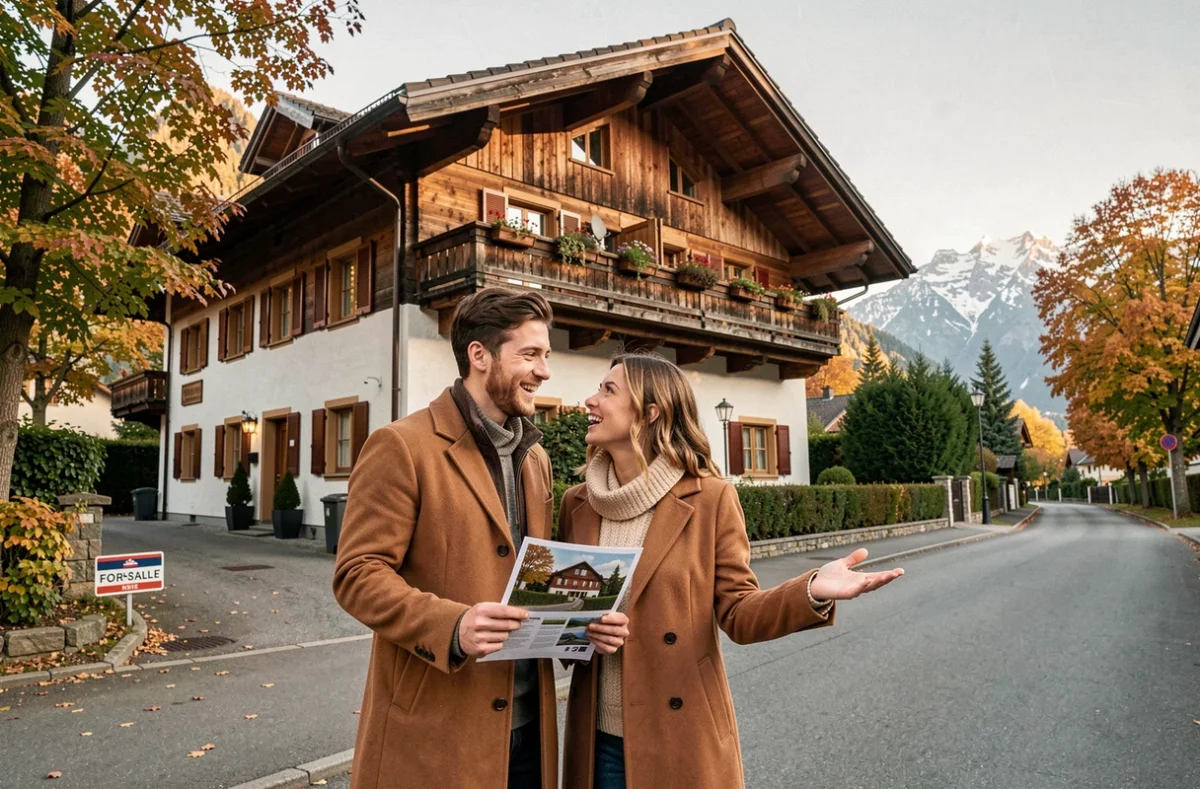
Real estate prices in Switzerland: what recent figures show
Recent data confirms the trend: residential real estate prices continue to rise, both for condominiums and single-family homes.
These increases deserve to be viewed with some perspective. A modest quarterly increase may seem limited. But accumulated over several years, it represents a significant gap compared to wage growth.
The prestige segment is accelerating differently
In the high-end market, the dynamics are even more pronounced. The gap between regular real estate and prestige real estate is widening. Wealthy buyers, less sensitive to financing conditions, maintain strong pressure on premium properties. For a household with a median income, the situation is quite different.
Homeownership in Switzerland: concrete obstacles
The median price of a single-family home is around 1.15 million Swiss francs. This amount does not tell the whole story. What really blocks access to homeownership are the banking criteria applied to mortgage loans.
Here are the main barriers for a buyer:
- A personal contribution of at least 20% of the property’s price, part of which cannot come from the second pillar for primary residences above a certain threshold
- A financial capacity calculation based on a theoretical rate (often around 5%), which is well above actual rates, excluding many solvent households
- Intense competition for available properties, particularly in the Lake Geneva region and around Zurich, where offers often disappear before they are widely published
Young households increasingly rely on family assistance to build their down payment. Over the past thirty years, prices have roughly doubled, while incomes have not followed the same trajectory.
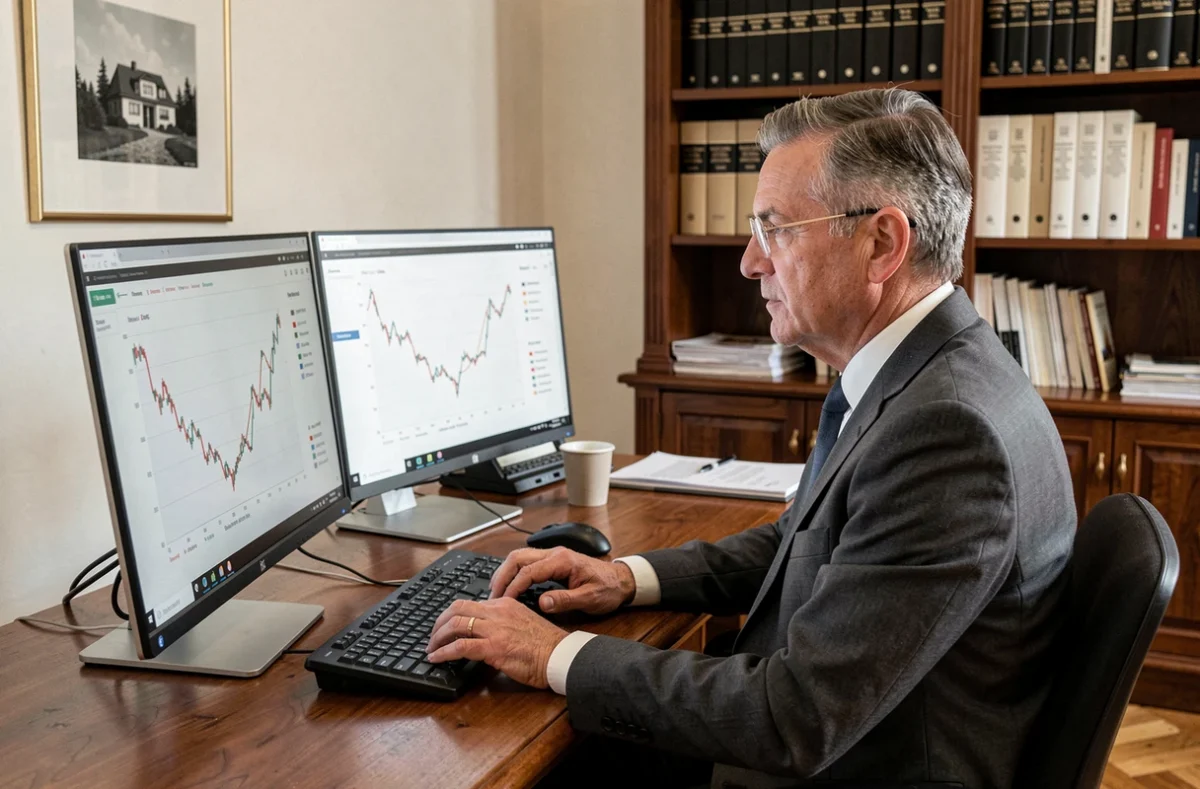
Swiss rental market: a tension that evolves locally
The vacancy rate for rental properties remains below 1% nationwide. This statistic masks very different local realities.
In Zurich, rental pressure is beginning to ease slightly. The explanation lies in two factors: a larger construction supply and a slowdown in immigration in the region. This does not mean that rents are decreasing, but that the waiting list for certain types of housing is shortening.
In Fribourg, the situation is also changing. More housing is available compared to the previous year. In other cantons, the pressure remains at its peak.
Advertised rents and current rents: two distinct realities
A point often misunderstood: the increase in advertised rents (those listed for new leases) slowed between the end of 2024 and the end of 2025. Meanwhile, rents for ongoing leases could decrease in 2026, as the reference mortgage rate has fallen.
These two movements are not contradictory. The first concerns new tenants, while the second concerns existing tenants. A tenant who does not move may see their rent decrease due to the reference rate mechanism, while a newcomer will pay a higher market rent.
Cantonal disparities: Geneva, Zurich, and the rest of the country
Prices and dynamics vary significantly from canton to canton. Geneva and the Lake Geneva region remain among the most expensive and tightest markets in Switzerland. Zurich and Zug attract high-income households, which drives prices up in the premium segment.
Outside of these hubs, some regions still offer more realistic access conditions. The price difference between an apartment in central Geneva and an equivalent property in a peripheral canton can reach a factor of two or more.
The Swiss real estate market in 2026 is not just a uniform upward curve. Price increases coexist with pockets of rental relaxation, a gap between supply and demand, and access conditions that exclude an increasing share of households. Monitoring these developments canton by canton remains the best way to identify real opportunities.