
Before comparing caterers or choosing a color palette, the very first step in a well-organized wedding often takes place at the town hall. Wedding planning depends on precise administrative deadlines that shape the entire schedule.
Administrative procedures: the hidden timeline of wedding planning
Have you noticed that most guides start with the budget or reception venue? Yet it’s worth dealing with the civil marriage paperwork first, because it comes with non-negotiable time constraints.
In France, a civil wedding cannot take place until the tenth day after the banns have been published. The paperwork must be complete before the town hall can begin this process. Appointment wait times vary from one municipality to another: some town halls have waits of several weeks, while others may be booked up for several months.
Check the town hall’s availability before booking your reception venue. If you reserve a date for the venue and the town hall can’t accommodate you that day, you could lose your deposit or have to reschedule all your arrangements.
One detail that’s often overlooked is the validity of civil status documents. A French birth certificate is generally valid for less than three months, and this period is calculated from the date you submit your paperwork, not the wedding date. So if you’re planning your wedding a year in advance, there’s no point in requesting your documents too early.
For couples with different nationalities, additional documents (translations, apostilles, legalizations) can make the process even longer. You’ll need a separate administrative timeline alongside your wedding plans. This is covered in detail in Mariages du Monde’s wedding planning guide, which structures the preparations around these often-underestimated steps.
Wedding budget: allocate funds by category instead of setting one overall figure
Setting a total budget is everyone’s first instinct. The problem is that a round number doesn’t tell you anything about the trade-offs you’ll need to make.
The venue and catering account for around half of a wedding’s overall costs. Knowing this from the outset helps you avoid booking a stunning venue only to discover that the remaining budget won’t cover the meal.
Three practical trade-offs that can change the bill
- Guest count and cost per person: each additional guest increases the cost of catering, furniture rental and drinks. Cutting ten people from the guest list could free up enough money for a better photographer.
- Day of the week: a weekday or Friday wedding often costs less for the venue, DJ and catering. The savings can make a significant difference to your overall budget.
- Season: peak season (May to September) brings the highest demand. Vendors charge their highest rates and book up quickly. An autumn or winter wedding gives you more room to negotiate and more options to choose from.
Instead of listing every possible expense in a giant spreadsheet, focus on these three factors. They determine your actual budget before you even contact a vendor.
Wedding timeline: anchor every decision to a specific time frame
A wedding timeline isn’t just a to-do list. It’s a tool that assigns each decision a specific time frame based on how different tasks depend on one another.
Why does this distinction matter? Because some decisions hold up the ones that follow. The venue determines the maximum guest count, catering logistics and decorating constraints. Until the venue is confirmed, most other choices remain on hold.
Decision windows to keep in mind
Between twelve and nine months before the big day: book the venue, contact the caterer and prepare your town hall paperwork. These three items have the longest lead times and the tightest availability.
Between nine and six months out: book your photographer, florist, DJ or band. These vendors often work with seasonal booking schedules. Waiting until the final quarter limits your options to whoever is still available—not necessarily the best fit for your plans.
The final three months are for adjustments, not major decisions. Seating plan, final fitting, vendor coordination and menu confirmation all depend on having the overall wedding plan in place.

Outdoor ceremony: plan for what you can’t control
An outdoor ceremony adds a special emotional dimension. But the weather is still something you have no control over.
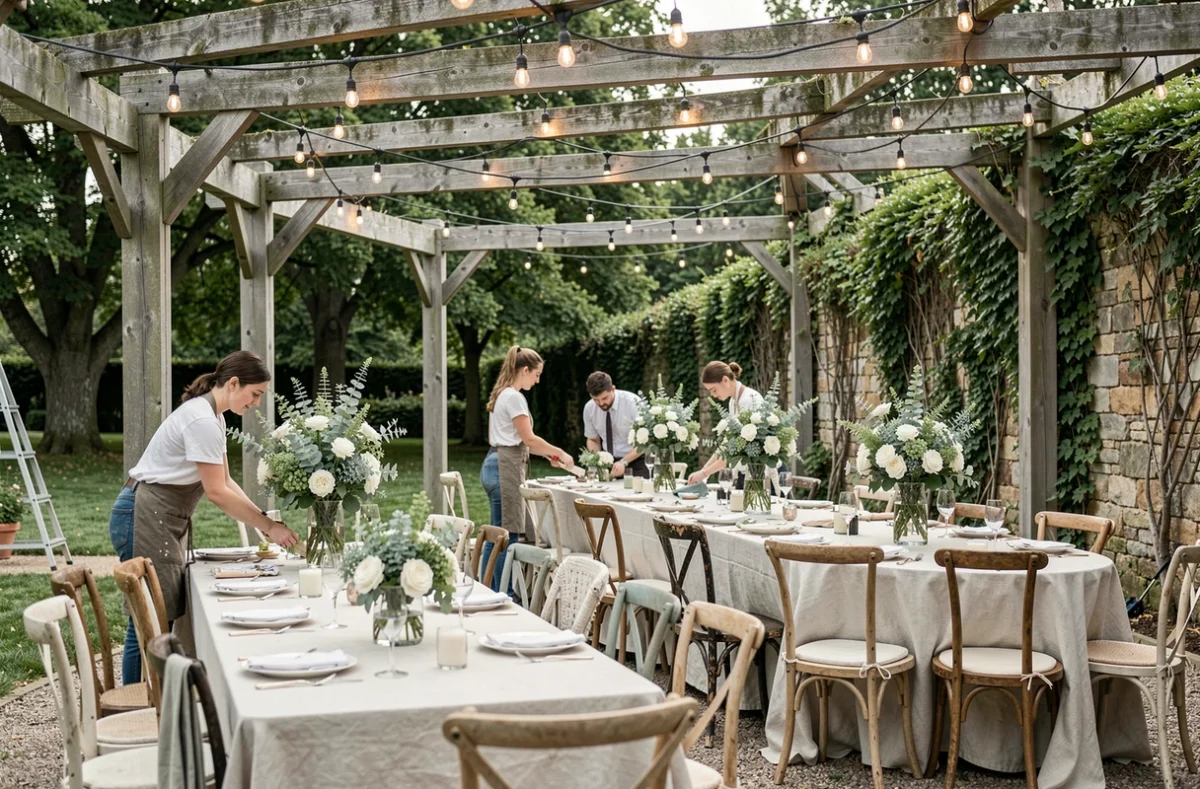
Always have a covered backup plan, even if the forecast looks good two weeks beforehand. Reliable forecasts only extend a few days ahead. The venue should have a nearby indoor space you can move to quickly, without having to take down all the decorations.
Other things to check for an outdoor reception:
- Access to electricity for sound and lighting, especially if the ceremony continues into the evening
- Local noise regulations: some municipalities require amplified music to stop before midnight
- Ground conditions after rain: grass can become difficult to walk on in heels or navigate in a wheelchair, so consider installing stable pathways
These details may seem minor while you’re dreaming about the big day. On the day itself, they can make the difference between a smooth celebration and a string of technical problems.
A successful wedding doesn’t depend on every detail being perfect. It depends on having a solid foundation in place beforehand: a well-managed administrative timeline, a budget allocated to the right priorities, and a schedule that distinguishes major decisions from last-minute adjustments. The rest—the emotion, the laughter, the dancing until the early hours—comes naturally when logistics are no longer weighing on the couple.