
A bracelet slipped onto your wrist before heading to work, a necklace absent-mindedly touched during a meeting: you’re not thinking about the jewelry itself, but about the dinner where it was given, the beach walk that weekend, the laughter in the car. A couple’s piece of jewelry acts as a shortcut to a specific moment. It doesn’t need to be expensive or spectacular; it just needs to be tied to a story you shared.
Materials and prolonged skin contact: what couple’s jewelry needs to withstand
A couple’s bracelet is worn every day—under the shower, at the gym, even while sleeping. Jewelry is exposed to friction, sweat, and soap. Before choosing a design, check how well it will hold up over time.
European regulations limit the release of nickel from jewelry in prolonged contact with the skin. The issue isn’t simply whether the alloy contains nickel, but how much the metal releases over time. Piercing posts are subject to even stricter limits. Jewelry worn every day must comply with these release limits, not just display a “nickel-free” label on the packaging.
Since December 13, 2024, the European General Product Safety Regulation (GPSR) has also applied to jewelry sold to consumers, including personalized pieces purchased online. For couples ordering an engraved bracelet from an online store, this means the seller must provide product safety and identification information. If these details are missing from the product listing, look elsewhere.
You’ll often find the little symbols of love found on couple’s bracelets in surgical-grade stainless steel, 925 sterling silver, or gold. Stainless steel is the most resistant to everyday wear, silver needs regular care to prevent tarnishing, and gold retains its shine but comes at a different price point.

Engraving, dates, GPS coordinates: personalizing jewelry around a specific memory
The most common personalization is engraving a date: a first date, a memorable trip, or the birth of a child. Dates are often engraved on bracelets, rings, and lockets. But a commemorative piece of jewelry is more meaningful when it’s built around a shared experience, rather than a generic symbol.
Engrave the GPS coordinates of the restaurant where you met, the title of a song you heard together at a concert, or a phrase spoken at a pivotal moment. These details turn an accessory into a keepsake that no one else can decipher. The jewelry becomes private, almost like a code.
Practical personalization options to compare
- Text engraving (a name, date, or short word) works well on bangles and flat rings. Legibility depends on the width of the piece: below a certain size, the characters become difficult to read with the naked eye.
- Engraving GPS coordinates or designs (a fingerprint, constellation outline) requires laser work. Check that the jeweler offers a proof for approval before the final engraving.
- Adding a photo to a locket or pendant is a classic option for necklaces. The quality of the result varies depending on the technique (printing, resin, or hand-painted miniature).
- An engraved QR code linking to a video, voice message, or shared album is a newer option. The drawback: if the link or online service disappears, the QR code no longer works.
The right choice depends on the piece itself. A delicate cord bracelet can’t take the same engraving as a wide steel cuff. First decide which memory you want to preserve, then find the design that can carry it.
Couple’s bracelet, necklace, or ring: choose based on how it will actually be worn
You wouldn’t give the same piece of jewelry to someone who works in an office as you would to someone who exercises every day or works with their hands. The type of jewelry you choose determines how often it will actually be worn—and, in turn, how strongly it stays connected to the memory.
A couple’s bracelet is the style most often worn every day. It slips under a sleeve, suits most professional settings, and stays discreet. Cord designs with magnetic clasps stay securely on the wrist without restricting movement.
A necklace with a pendant is a better choice if you want to keep the jewelry close to your heart, quite literally. A locket containing a photo or engraved message can be worn under clothing, out of sight. A necklace serves as a private keepsake that no one else can see.
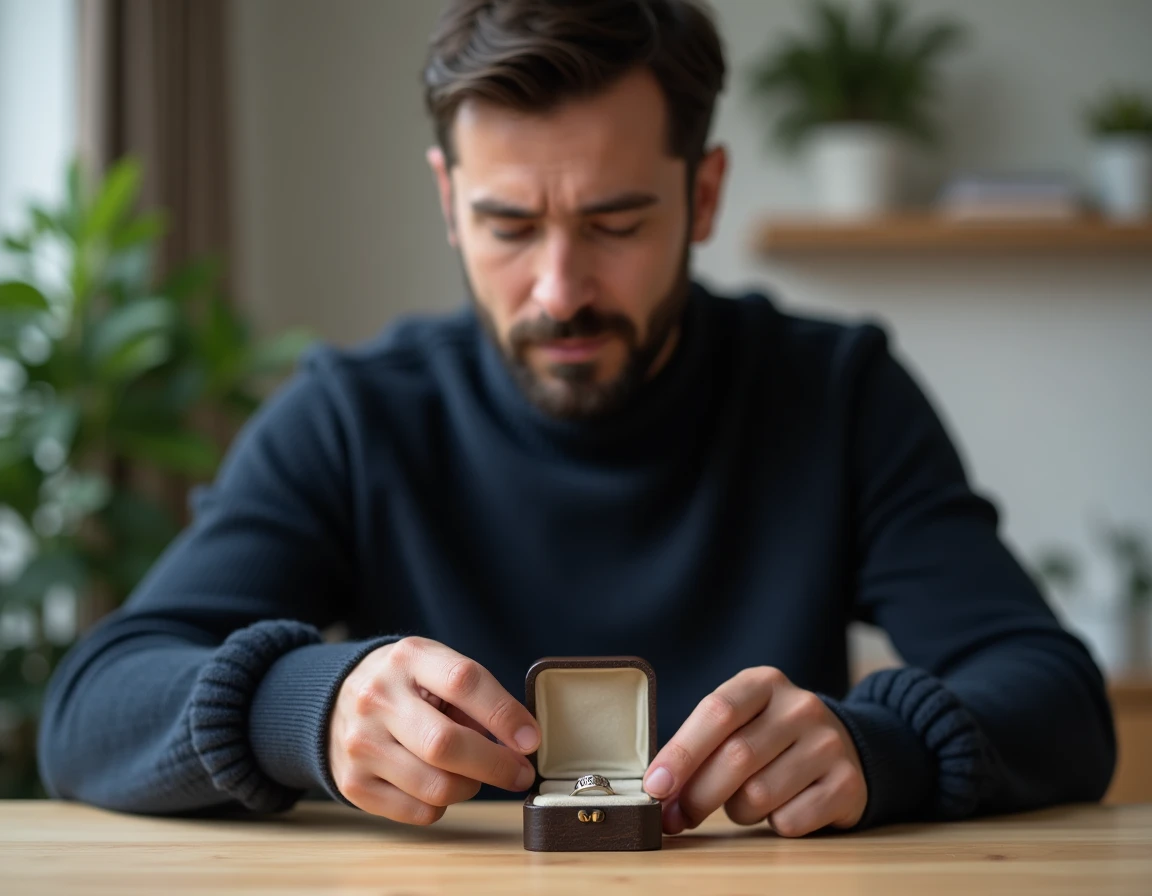
A couple’s ring, other than a wedding band, is a more significant symbol of commitment. It’s often reserved for important milestones: a meaningful anniversary or a shared life plan. A matching pair of rings (the same metal, with complementary engravings) creates a bond that’s always visible.
Couple’s jewelry and memory: why an object brings a moment back
Physical objects connected to personal experiences can help bring back autobiographical memories. There’s no magic power at work here; it’s a cognitive process: touching or seeing an object associated with a specific event makes it easier to recall that event.
For a couple, this means that a bracelet given during a weekend in Lisbon doesn’t just bring “Lisbon” to mind in the abstract. It brings back the smell of coffee, the light on the Tagus, and the conversation you had that morning. The jewelry doesn’t symbolize the memory; it brings it back.
This effect is stronger when the jewelry is worn regularly. A piece left in a drawer gradually loses its ability to bring memories to mind. That’s another reason to choose something suited to everyday wear rather than a “special occasion” piece that only comes out twice a year.

The most meaningful piece of couple’s jewelry isn’t the most expensive or elaborate. It’s the one you wear often enough for the memory to come back effortlessly—in the middle of an absent-minded gesture, as you adjust your bracelet while waiting for the subway or turn your ring between your fingers.