A renovated home can achieve a good energy rating yet become unbearable as soon as the first hot weather arrives. The energy performance certificate (DPE) mainly assesses heating needs: it says little, if anything, about how a home performs in summer. Decorating and furnishing your home without taking this into account means designing only half a space. The challenge is to bring together aesthetic choices, materials and ventilation so that your home stays comfortable all year round.
Thermal mass and surface materials: summer comfort starts with the materials
Adding plasterboard over lightweight insulation on the inside of a wall breaks the connection between the indoor air and the mass of the load-bearing wall. The home heats up faster during the day and releases less coolness at night. This effect is often overlooked in decorating projects that focus on visible finishes without considering the wall as a whole.
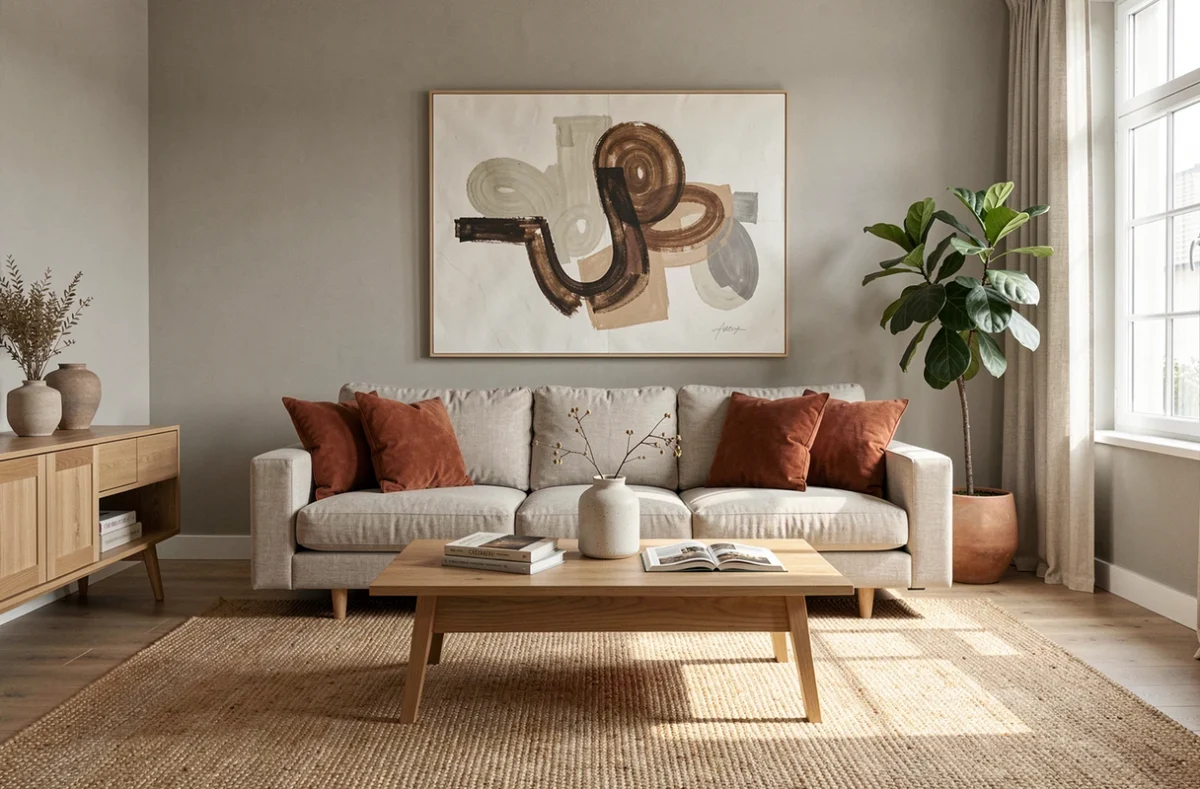
High-density materials such as stone, solid brick, terracotta and polished concrete store heat during the day and release it slowly. Preserving or exposing the thermal mass of load-bearing walls improves passive regulation of indoor temperatures. Lime plaster on an old wall, cement tiles on the floor or an unfinished concrete slab can provide this thermal mass without compromising on style.
By contrast, adding multiple layers of synthetic materials—such as PVC flooring, polystyrene drop ceilings and thick carpeting—reduces a building’s ability to buffer heat spikes. When choosing flooring or wall coverings for a south- or west-facing room, thermal mass should be considered before colour.
The resources available in Sklunk’s home section bring together decorating ideas and technical considerations for every room, from the living room to the bedroom.
Solar shading and interior layout: keep the heat out before it gets in
ADEME and France Rénov’ recommend exterior solar shading as the first line of defence against overheating. Shutters, external venetian blinds (BSO) and pergolas with adjustable slats intercept sunlight before it passes through the glazing. An interior blind blocks only half as much solar heat gain as an exterior shading system.
The room layout can reinforce this approach. Placing a sofa or workspace away from a south-facing window reduces direct exposure. Thick, light-coloured linen curtains filter the remaining light without turning the living room into an oven. Colour matters too: a dark wall opposite a large window absorbs more solar radiation and warms up the room.
Cross-ventilation and furniture placement
Ceiling fans use little energy and create a noticeable cooling effect. Their effectiveness depends on the clearance beneath the blades: a tall piece of furniture or bookcase directly below can disrupt airflow. Leaving clear space beneath the fan should be part of the room layout.
Ventilating during the cooler hours—at night and in the early morning—requires openings on opposite sides. In a dual-aspect apartment, keeping the path between north- and south-facing windows clear—avoiding solid partitions and opting for screens or low furniture—helps natural ventilation. A hallway blocked by a wardrobe can cut off the airflow.
Insulation and decorating: avoid work that makes summer discomfort worse
Insulation designed solely for winter can make a home less comfortable in summer. The Locafis guide recommends reducing a home’s energy needs first, then sizing the heating system to meet the remaining demand. The same principle applies to cooling: insulating the attic without providing high-level ventilation traps heat beneath the roof.
- An internal lining with no remaining thermal mass removes the buffering effect of the load-bearing wall. Where the building and local planning rules allow, consider external insulation instead.
- An insulated attic with an unventilated underlay can turn the upper floor into a sauna. Install ventilation openings at both the eaves and the top of the roof slope.
- A positive-pressure single-flow mechanical ventilation system can draw hot outdoor air inside during the day. A dual-flow system with a bypass can divert air around the heat exchanger in summer, making it possible to benefit from cooler night air.
These considerations also influence decorating choices. An open-slatted wood ceiling beneath an insulated attic allows air to circulate towards the high-level ventilation, whereas an airtight stretch ceiling would block it.
MaPrimeRénov’ and renovation budgets: check what support is available before signing
MaPrimeRénov’ rules have been suspended and revised several times since 2025. An article published by Maison & Travaux in November 2026 reports that uncertainty persists. Checking the applicable conditions with France Rénov’ before signing a quote remains the only reliable precaution, rather than relying on a decorating guide or outdated information.
The electricity conversion factor used to calculate the DPE has also changed. The Locafis guide, updated on 29 October 2026, notes that a further reduction is scheduled for 1 January 2027. A home heated with electricity may receive a better rating even if no work has been carried out. This distinction between an administrative improvement and a genuine improvement to the building should be considered before committing to a renovation budget.
Prioritise the measures with the greatest impact
When the budget is limited, we recommend tackling the following in order:
- Exterior solar shading on the most exposed façades (south and west). This is often an inexpensive measure with an immediate, noticeable effect.
- Insulating the attic or upper floor, which reduces both winter heat loss and summer overheating, provided ventilation is adequate.
- Replacing windows with solar-control double glazing (a low solar factor for south- and west-facing windows) to reduce heat gain without darkening the room.
- Installing a ceiling fan in the main living areas for a modest cost and an immediate improvement in perceived comfort.
Each measure directly affects indoor comfort and the decorating choices that follow: there is little point choosing heat-sensitive wallpaper if the wall behind it remains a thermal sieve in winter and a heat store in summer.
Planning your interior around your home’s full thermal cycle changes the order in which decisions are made. Flooring materials, furniture placement, curtain styles and the colour of a south-facing wall are not merely aesthetic choices. They all contribute to a thermal balance that neither air conditioning nor a good DPE rating can guarantee on its own.