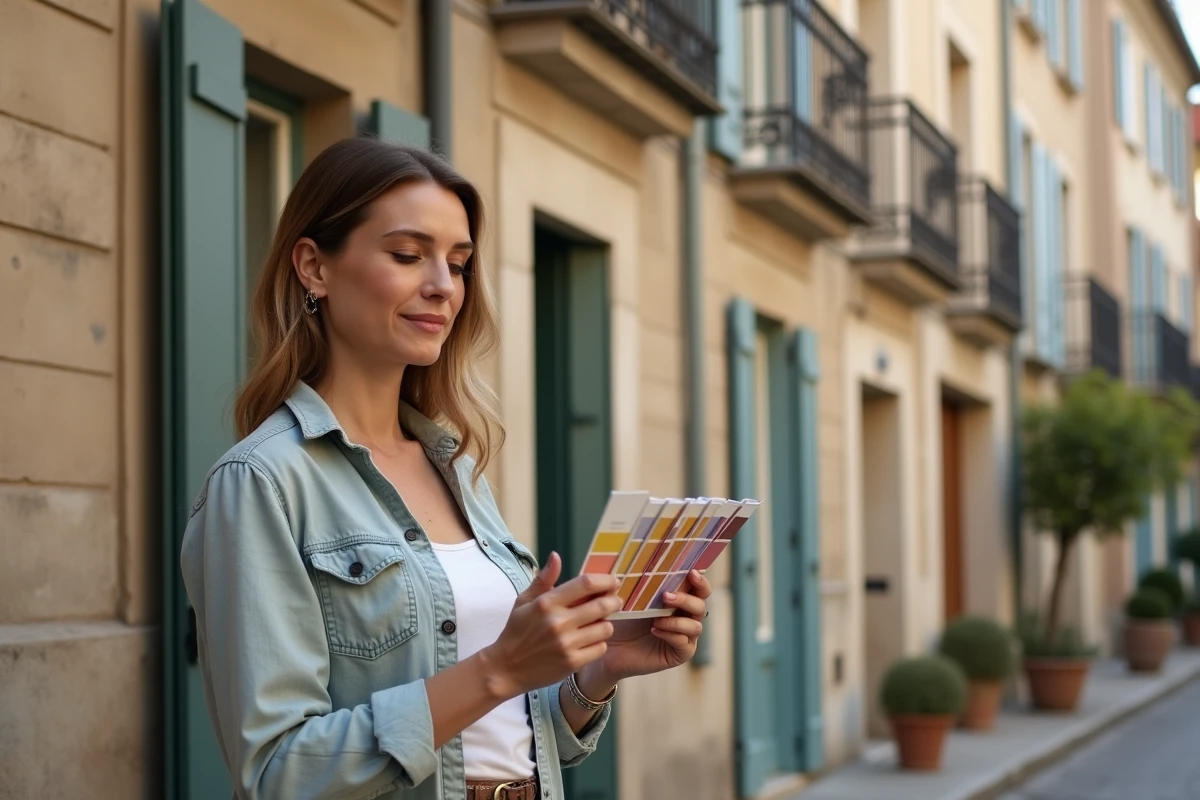
In a protected area, any change to the facade color requires prior authorization, even for a simple like-for-like restoration. Choosing a non-compliant shade can lead to work suspension and financial penalties.
From one village to another, the rules vary significantly. Some municipalities severely restrict the authorized palette, while others accept more unexpected shades, but always under strict conditions. Forget whims or current inspirations: the official color chart, established by the Architect of Buildings of France, takes precedence over any decor trend or personal preference. This framework applies to all property owners, without exception or special favor.
What the law says: understanding the rules of the Buildings of France regarding facade colors
Changing the exterior color of your house in a protected area leaves no room for improvisation. French regulations are clear: before starting any work, you must submit a prior declaration of works to the urban planning department of the town hall. Even for a simple facelift, the procedure is unavoidable. The final decision rests with the ABF, the true guardian of the local architectural heritage.
The local urban planning plan (PLU) precisely outlines the possible shades. This document, the result of a reflection conducted with the architecture urban planning environment council, guides choices towards shades that resonate with the identity of the territory. Forget the idea of a flashy facade: artificial or bright colors are systematically excluded. The prescriptions favor tones drawn from the surrounding nature, ochres, sands, and earth tones, all of which connect each facade to the collective history of the place.
The authorized colors for Buildings of France are listed in official color charts, available at the town hall or from the CAUE. These documents serve as the reference for any authorization request. Adhering to these requirements contributes to the visual coherence of the streets and the preservation of shared memory.
Here are the steps to follow to leave nothing to chance:
- Consult your municipality’s urban planning regulations before any steps.
- Prepare a complete file, including samples of the shades you are considering.
- Meet with the ABF to anticipate any specific constraints in your department.
Can you really choose any color you want for your house?
Repainting your facade according to your desires? The idea is circulating, but the administrative reality quickly imposes itself. The margins for maneuver are defined by the local color chart: this reference, validated by the ABF, sets the boundaries for each project. It is impossible to go it alone: every chosen shade must align with those listed by the municipality, derived from the regional color charts.
Deviating from the framework exposes you to a refusal. Pure white, garish colors, or overly modern finishes are systematically excluded in protected areas. It is the natural shades, ochre, sand, soft gray, terracotta, that prevail. The same logic applies to joinery and metalwork: here again, the palette remains measured, with bright shades reserved for rare exceptions. Only deep and discreet colors pass muster, often on specific elements.
Outside classified areas, freedom widens, but passing through the urban planning department remains imperative. Every detail counts: walls, shutters, gates, everything must be included in the file, with photos and references from the color chart. A well-prepared project, supported by precise samples of facade paint or wood paint, facilitates the progress of the file.
To avoid unpleasant surprises, here’s what to remember:
- Consult the communal color chart before any paint purchase.
- Ask your questions to the urban planning department: getting validation in advance eliminates the risks of blockage or forced restoration.
- Ensure harmony with neighboring facades: this coherence favors project acceptance.
Practical tips for harmonizing your project with the authorized shades in your municipality
Study the immediate environment
Before choosing a color, sometimes all it takes is to open your eyes to the neighborhood. Integration is a matter of accuracy: selecting a shade already present in the street or village allows the house to fit naturally into the landscape. The communal color charts or those from the architecture urban planning councils highlight sober and authentic ranges, drawn from local heritage.
Consult reference documents
The recommendation booklet from the town hall or the urban planning department is your best ally. This document, available at the town hall or sometimes online, specifies the authorized shades sector by sector. Note the exact references: RAL, Pantone, or commercial name. A color diagnosis, conducted in advance, helps avoid refusals during the prior declaration.
Here are some reflexes to adopt to limit errors:
- Test the shade on a wall sample before diving in.
- Maintain coherence between the facade and the joinery, without creating overly sharp contrasts.
- Seek advice from the urban planning department or a heritage architect to refine your project.
Respecting these prescriptions is much more than an administrative formality: your house becomes a piece of the whole, a conscious contribution to the identity of the municipality. Do you have a doubt, a hesitation? The urban planning department remains the preferred contact for any technical questions or declaration procedures. Adjust each choice to the reality of the site: this is how the facade of your house will find its rightful place, discreet and lasting, in the urban fabric.