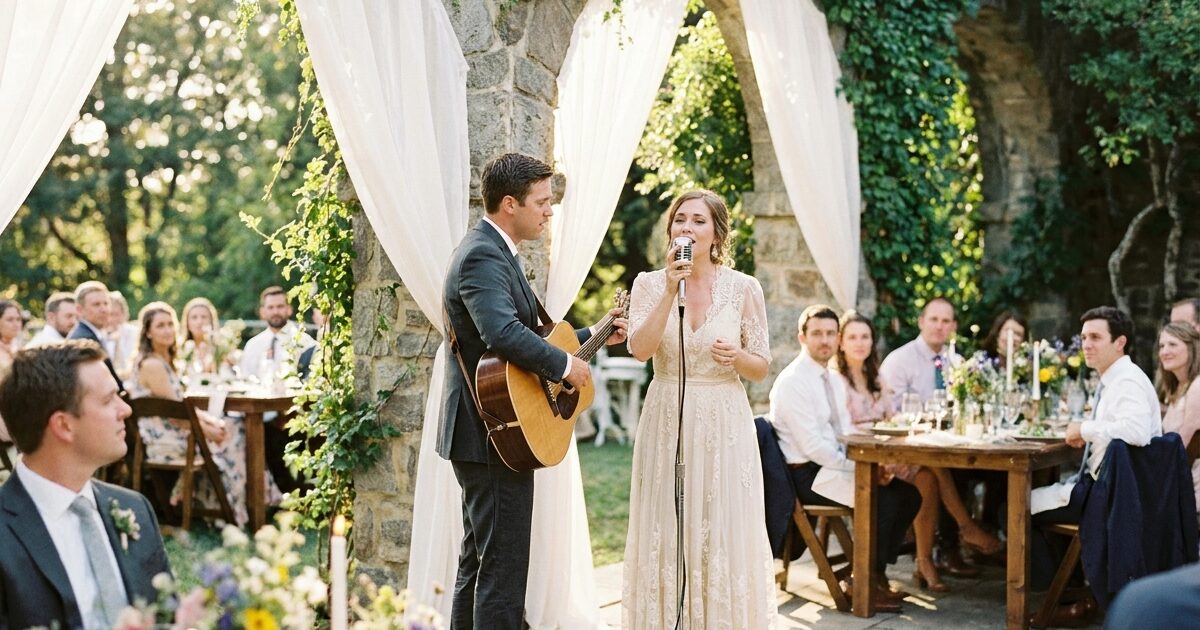
An outdoor wedding makes the most of natural light, open space and a connection with nature. Choosing entertainment for the celebration comes with challenges you don’t face indoors: sound disperses, the ground may be uneven, and a sudden shower can throw everything into question.
Regulations also impose stricter limits on noise levels at night, making acoustic performances or schedules that take the neighbors into account a better choice.
Outdoor entertainment and noise restrictions: what the regulations mean for you
Have you ever been to an outdoor concert where the sound seemed to drift without direction? Outdoors, the lack of walls means sound doesn’t stay focused. More power is needed to achieve the same effect as indoors, which can create an immediate problem with the neighbors.
For activities that require authorization or take place regularly, regulations assess noise levels against the ambient background noise. Limits are stricter at night. Local ordinances may impose additional restrictions, with amplified music sometimes required to end well before midnight.
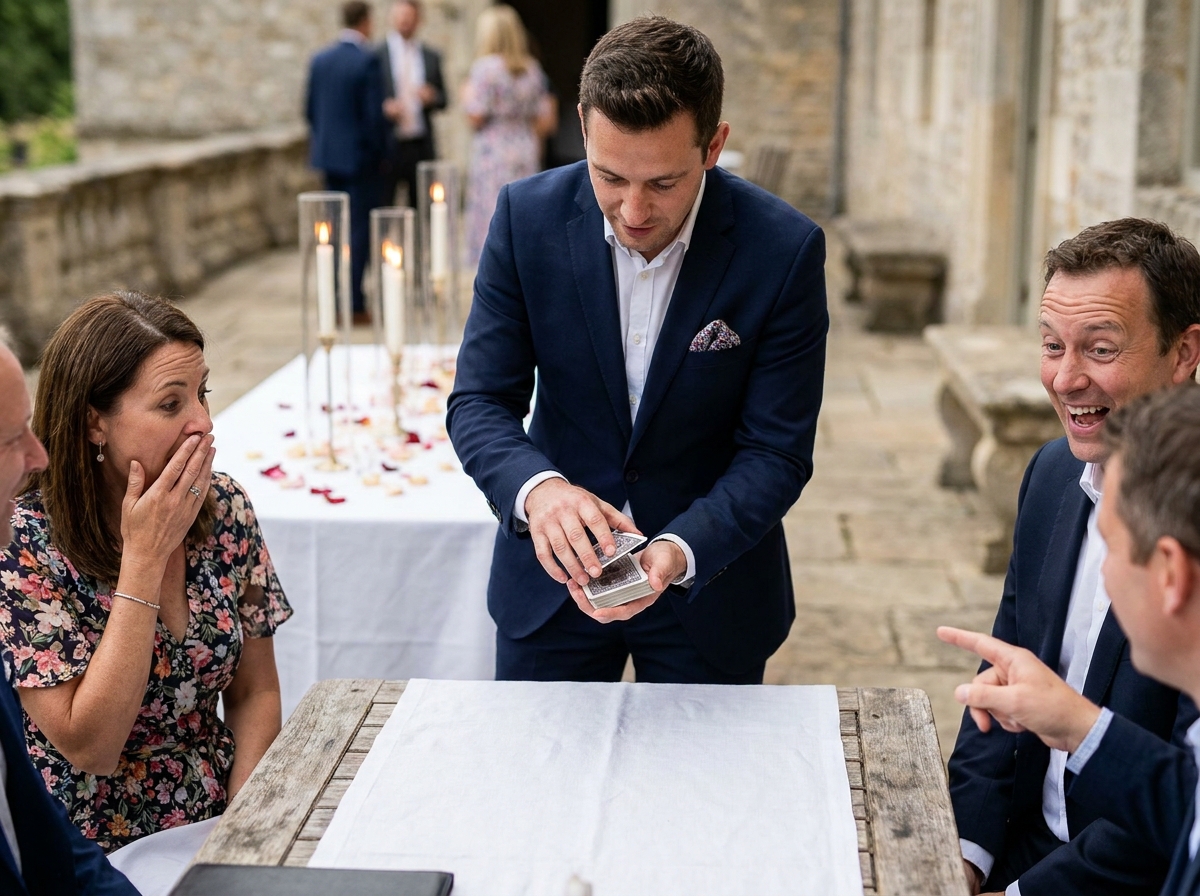
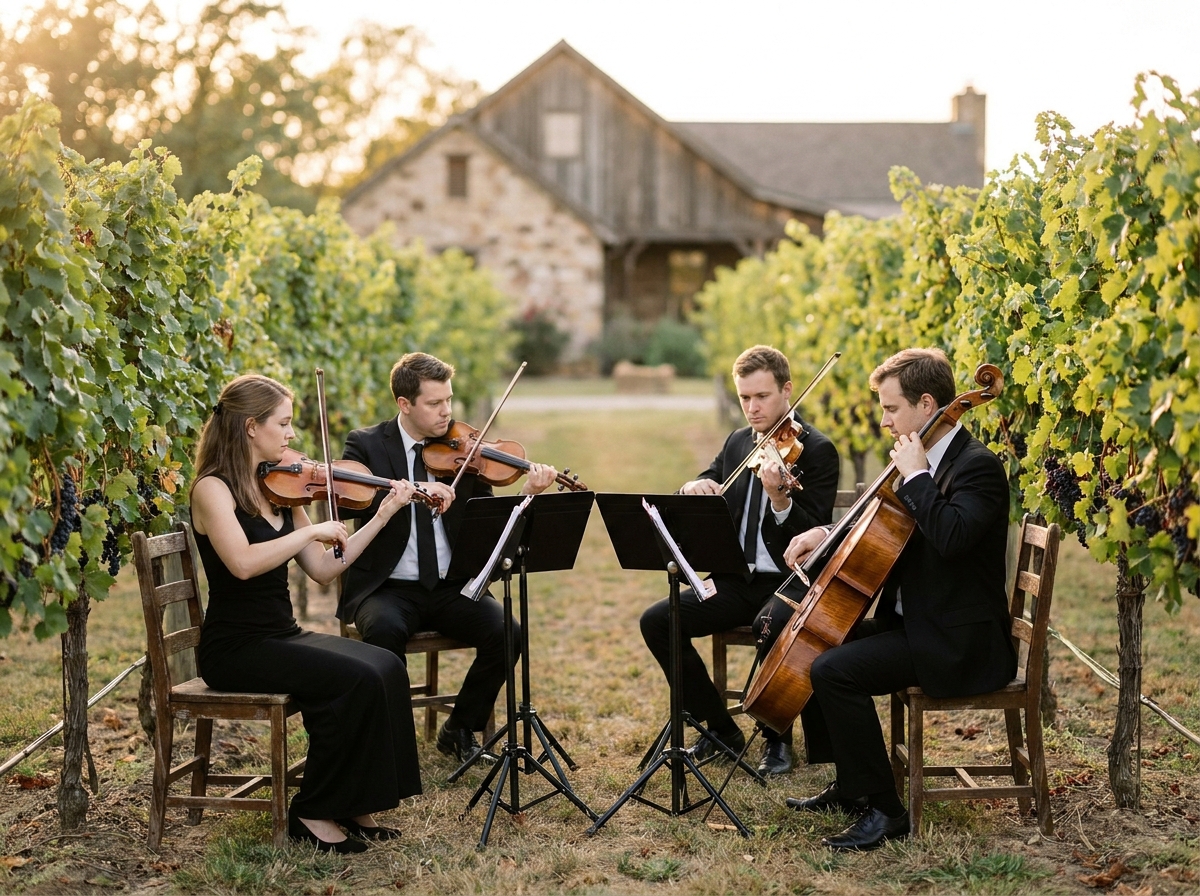
This framework favors entertainment with controlled sound levels and no heavy amplification. An acoustic duo, string quartet or magic show can perform without a wall of speakers. A rock band or outdoor DJ set, on the other hand, may prompt complaints if the venue is close to homes. Hiring a magician in Paris is a great way to offer a visual, interactive performance that doesn’t rely on high volume.
Before signing with a music provider, check the rules that apply in your municipality and at your reception venue. A wedding planner or the venue owner can tell you the permitted hours and noise levels.
Ground conditions, staging and performer safety outdoors
People often think about shelter for the guests, but rarely about the surface the performers will be working on. Rain, evening dew or simply ambient humidity can make a lawn slippery in minutes.
Dance and acrobatic performances require a stable, dry floor. Without a dedicated floor, a dancer could sprain an ankle and an acrobat could fall. A juggler or close-up magician, by contrast, works within a small area and can perform on almost any surface.
Which performances are least dependent on the ground?
- Close-up magic: the performer moves among the guests, with no stage or technical setup required. They can adapt to any surface, including an uneven garden.
- Mentalism: a chair and a microphone are all that’s needed. There’s no fast movement and no risk related to the ground.
- Static acoustic music (jazz trio, harpist, quartet): the musicians remain seated or standing in a small area, so a simple rug or low platform is enough.
By contrast, a fire show, aerial circus troupe or contemporary dance performance requires costly ground preparation outdoors. If your budget or venue can’t accommodate this, choose entertainment that works without stage infrastructure.
Weather backup plan: choose a show that can move indoors in ten minutes
Most articles about outdoor weddings recommend having a backup plan in case of rain. Few point out that the backup venue must also work for the planned entertainment. An indoor space may be able to accommodate your guests without having the ceiling height, power supply or room needed for a stage.
In a thunderstorm, a tent or marquee is not a safe shelter. The recommendation is to move into a solid building. This means your entertainment must be easy to pause, move or replace.
How quickly can you move indoors?
A show with bulky scenery, suspended equipment or a complex technical setup can take more than an hour to dismantle and set up again. If a storm breaks during the cocktail hour, that kind of performance is off the table.
The most adaptable acts are those that fit in a suitcase or flight case. A magician can pack up their equipment in minutes. An acoustic musician only needs their instrument. A caricaturist can set up at any table.
Why does this matter so much? Because the weather for an outdoor wedding is decided on the day, not when you sign the contract. Your entertainment provider should agree in writing to both indoor and outdoor setups and have tested each one before the big day.
Entertainment suited to each part of an outdoor reception
A wedding follows a set sequence: ceremony, cocktail hour, meal and evening celebration. Each part calls for a different kind of entertainment, and an outdoor setting brings its own challenges at every stage.
During a garden cocktail hour
Cocktail hour is when guests mingle. A front-facing performance (stage, rows of chairs) doesn’t work well at this point. Roaming acts are a better fit: close-up magic, stilt walkers and roaming musicians. These performers go to the groups of guests instead of waiting for everyone to gather in one place.
During the meal, under a tent or on a terrace
During the meal, guests are seated and attentive between courses. A mentalism or stage magic performance works well at this point, provided there’s a clear space visible from every table. Check the tent’s ceiling height if you’re planning acts with props that extend overhead.
In the evening: lighting conditions
As night falls, the atmosphere of an outdoor wedding changes. A light show (LEDs, illuminated juggling) is most effective after sunset. However, be mindful of light pollution for the neighbors and insects attracted to light sources.
Fireworks are a classic highlight of an outdoor evening, but they require a declaration to the town hall, a safety perimeter and a check of prefectural orders during periods of drought. Find out several months in advance.
How different types of entertainment compare for outdoor weddings
| Type of entertainment | Sound level | Ground requirements | Move indoors |
| Close-up magic | Low | None | Immediate |
| Mentalism | Low | None | Immediate |
| Acoustic trio | Moderate | Low | Quick |
| Dance / acrobatics | Variable | High | Difficult |
| Fire show | Low | Moderate | Impossible |
| DJ / amplified band | High | Low | Quick |
The best entertainment for an outdoor wedding isn’t necessarily the most spectacular on paper. It’s the kind that can still go ahead when the wind picks up, night falls or rain forces everyone indoors. Ask each provider three questions: What’s the sound level? What kind of ground is needed? How quickly can you move indoors? The answers will help you narrow down your options better than any catalog.