
In the field of measurements, the diversity of systems used around the world can often lead to confusion. A common example is the conversion between inches and centimeters, the respective units of the imperial and metric systems. Inches, widely used in the United States to measure screens or various objects, must be converted into centimeters to be understood in countries where the metric system is the norm. This conversion is essential not only in international trade but also in everyday situations such as carpentry, clothing making, or purchasing spare parts.
Understanding Measurement Units: the Inch and the Centimeter
The inch, an Anglo-Saxon unit of measurement still in use in some countries, particularly the United States, is ubiquitous in various fields such as screen size or DIY projects. One inch is equivalent to 2.54 centimeters, a rounded value but precise enough for most practical applications. Centimeters, on the other hand, are part of the metric system, adopted by the majority of countries and internationally recognized by the International System of Units.
The conversion between these two measurement units is therefore a necessary skill, not only for professionals but also in everyday activities like cooking or artistic creation. For example, to convert 61 inches to cm, simply multiply the number of inches by 2.54. An object measuring 61 inches will have a length of 154.94 centimeters.
Length measurement units, such as inches and centimeters, are at the heart of many professional and personal projects. Mastering their conversion is therefore an undeniable asset for navigating between systems and avoiding misunderstandings or potential errors that could arise when communicating measurements in an international context. So consider these equivalences for your future projects.
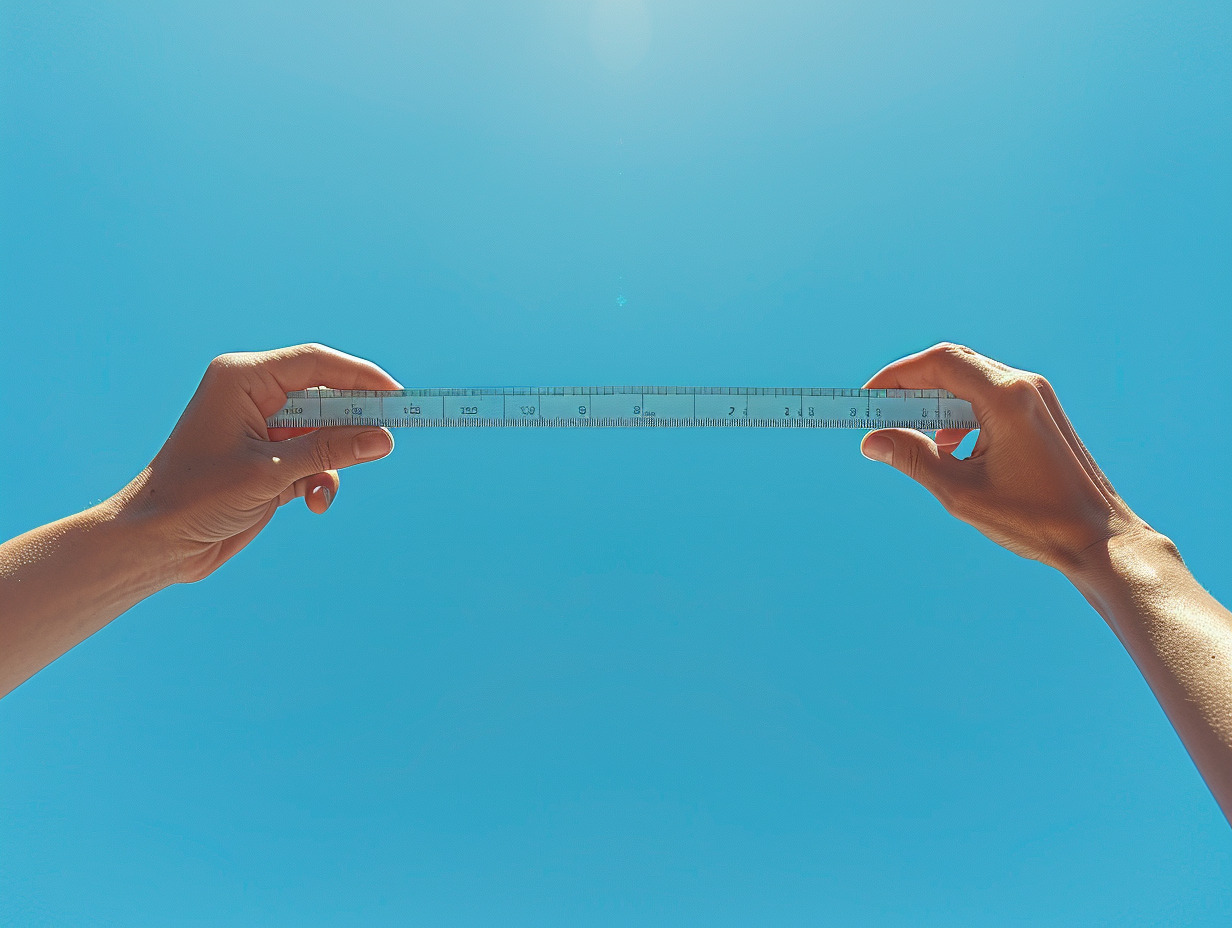
Practical Guide to Convert Inches to Centimeters
The world of measurements demands precision and flawless understanding, especially when transitioning from the Anglo-American system to the metric system. The basic conversion formula, which involves multiplying the number of inches by 2.54 to obtain their equivalent in centimeters, is an indispensable tool. This simple mathematical operation allows, for example, to know that 10 inches correspond to 25.4 centimeters.
To facilitate this conversion, using a conversion chart can be wise. This tool lists the most common equivalences between inches and centimeters, thus saving time and reducing the risk of error. Detailed conversion charts are easily accessible, both in printed form and online, for those who require quick and effective assistance.
Despite the apparent simplicity of the conversion, common errors can occur. These errors are often the result of negligence in calculation or a misinterpretation of fractions of inches. You must remain vigilant, particularly by systematically checking the results obtained and using precise calculation tools.
Tips to Avoid Errors include double-checking measurements, using online conversion calculators, and familiarizing yourself with the most commonly used equivalences in your field of activity. Understanding the relationship between inches and feet, where one foot equals 12 inches, can also be useful when managing larger measurements. Adopt these methods to ensure the accuracy of your conversions and the relevance of your work in an international context.